BLOG 182
“I think we often misunderstand what “nothing” really is. It is not emptiness. It is presence.”
(Maria King, friend and fellow swimmer)
In preparation for this blog I went online in hopes of finding a YouTube video by Eckhart Tollé that I’d discovered in earlier searches. I couldn’t remember the title so looked at my screen history (or whatever you call it) and proved a sad fact. I’m not mature enough to resist being hooked by a video documenting the domestication of a feral cat, that garnered 31M views! If the M stands for what I think it stands for, I have joined the ranks of (millions of) people with poor-to-no impulse control. Easily led astray by external stimuli that manipulate our emotions until we’re adopting small marsupials in a country where they’re not even proven to exist.
This also explains why I can’t go to Costco. Not only do I not have storage for magnums of maple syrup or 48 rolls of toilet paper, there’s also no telling how many bright shiny objects will catch my eye (and wallet) as I wander the aisles, and leave me pleading amnesty (or is it bankruptcy) with the credit card company. But I digress.
As fate would have it, I eventually found a video called: “How do I keep from being triggered?” Narrated by Elkhart Tollé, proving that, odds are, if one scrolls around long enough, one will stumble on something of value. (Not that there’s anything wrong with cat videos. I watched it all the way through.Then watched John Oliver dissing Pete Hegseth. Insanity. That put me off YouTube entirely.)
Thankfully the gods of good intentions came to my rescue by offering the theme, “how to avoid being triggered”, that has become topical for me. I recently stunned myself with a major mental rant at someone who so unintentionally triggered me that even in the midst of my indignant internal conversation I could register how ridiculous I was being, thankfully before I said or did anything irredeemable.
Feeling grateful that what I call my divine committee is still operating behind the scenes, I listened to Tollé explain that ego is synonymous with unconsciousness and therefore operates outside my present awareness:
“Ego can only operate as long as you’re unconscious. The moment you become aware of your ego it’s not really ego any more. It’s still a behavioral or mental/emotional pattern that operates in you but you are present when you know that there is this pattern operating in you, then you are not it. It operates in you and you are the space around it, which is the consciousness. You know it’s there. Before, it was ego, but when you recognize it for what it is, then it’s no longer ego. Ego is unconsciousness.”
I learned a lot from Tollés talk about the pain body, which he asserts is also a facet of ego, ergo unconsciousness. Past, suppressed indignities and/or suffering that weren’t properly addressed at the time remain stashed in my unconscious, and these in turn fuel the emotions behind my knee-jerk reactions, or rants. In order to have the detachment or objectivity to see what is behind my emotional reaction, I need what Tollé calls presence, or what I sometimes think of as self-awareness; the capacity to observe myself even as I am thinking or saying things in the heat of the moment that I’m bound to regret later.
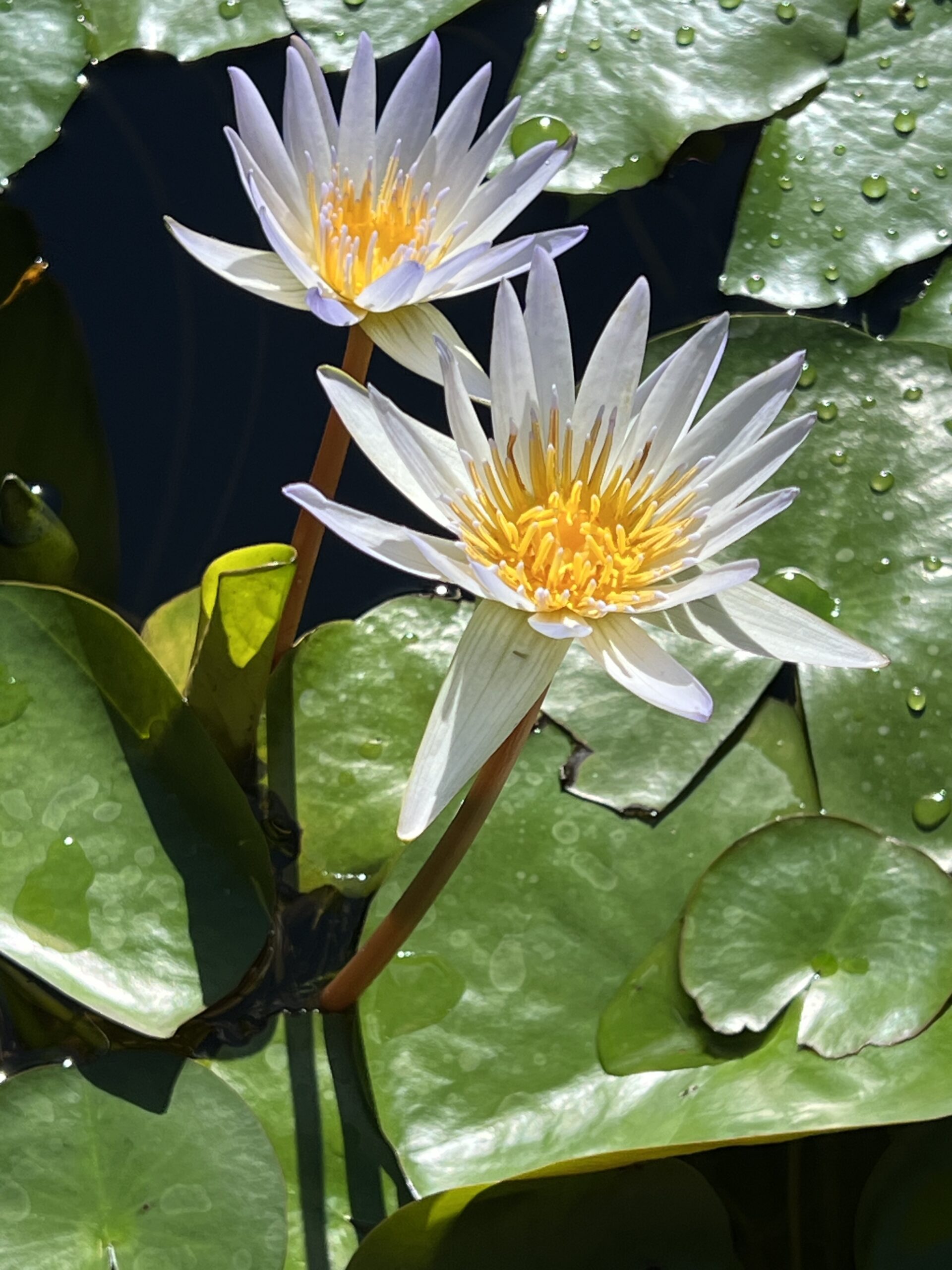
Tollé instructs us to first cultivate “presence” by being still and observant in ordinary circumstances, aka when not being provoked or angered by another person or situation. He suggests taking time in nature, silently observing the flora and fauna, and noticing not only the physical manifestation of, for instance, a flower, but also connecting with the animating spirit (or what I think of as the life force) of said flower. As St. Exupéry wrote in The Little Prince:
"It is only with the heart that one can see rightly; what is essential is invisible to the eye." (The Little Prince, 1943)
Therein lies the paradox. If we distance ourselves from our surroundings, complacent behind our screen of knowledge or concepts, we never really learn to engage with nature as it is. We skim the surface of the flower by naming it a rose and therefore thinking we know what it is. We don’t. So long as we are caught in thoughts and concepts, we cannot have a heartfelt connection with other people or our environment. When we cultivate presence, by essentially doing nothing, we can finally build a meaningful relationship with life in its myriad manifestations.
I’m going to stop here. I wish my American friends and readers a Happy Thanksgiving, and console my Canadian friends who had their turkey in October, that our country arguably initiated the first Thanksgiving celebrations:
"English explorer Martin Frobisher held a religious service of gratitude in 1578 after reaching northern Canada, predating the Plymouth feast by decades. Other early gatherings, such as Samuel de Champlain's 1606 Order of Good Cheer, also involved communal meals.”
That might trigger some knee-jerk reactions and thereby test one’s degree of presence!
Amen