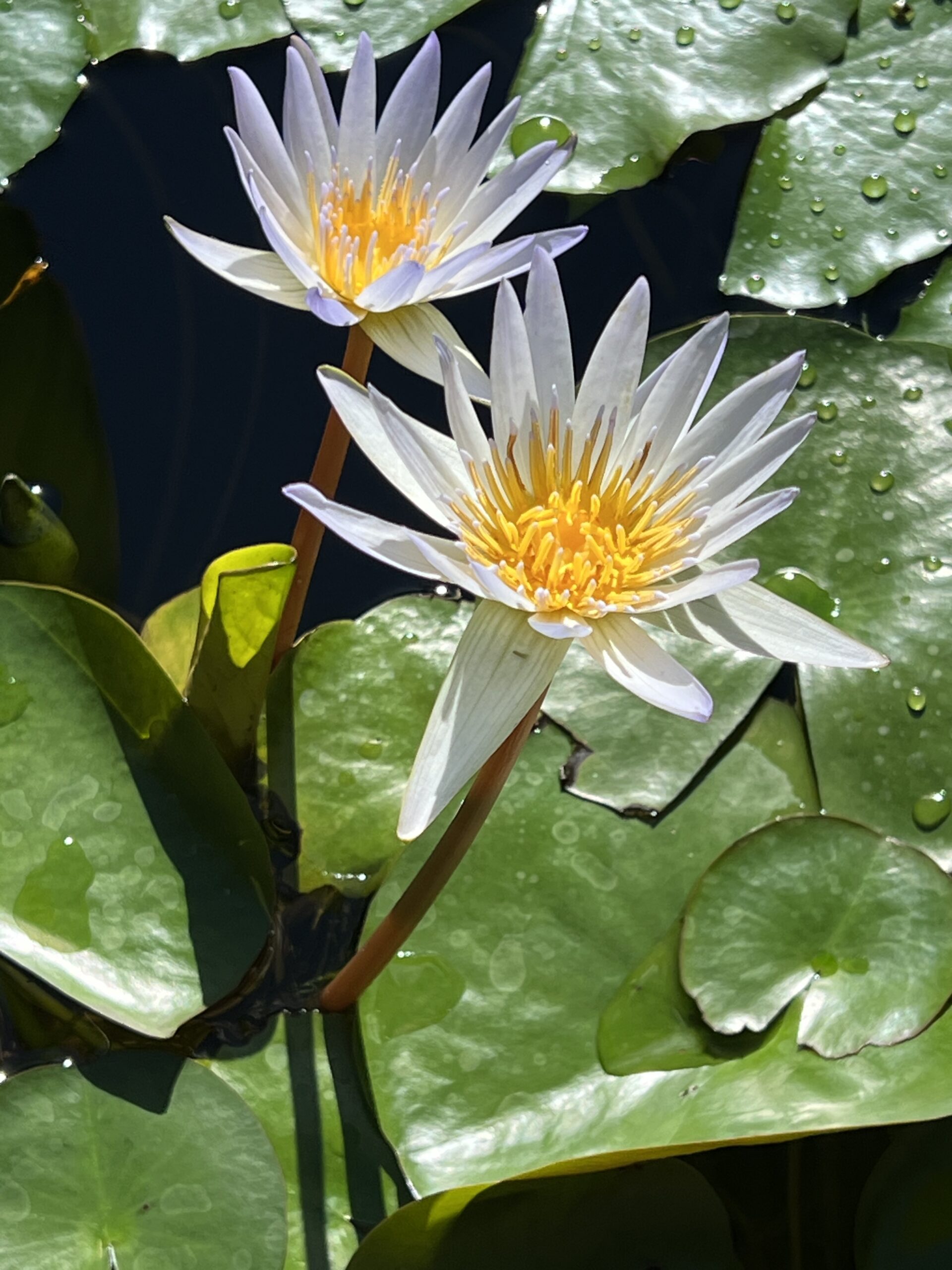
“In any war, in any country, innocent and powerless people are sacrificed to the power structures. When you turn to the Light and try to attract the Light, you have to realize also that where there is a lot of Light there can be a lot of shadow. The sun is not in the zenith for very long.”
(Swami Sivananda Radha Time to be Holy)
This morning, as I watched the local hummingbird zip in and out of our hyssop flowers, (also known as hummingbird mint) I was reminded of the time we hung a large hummingbird feeder from a tree branch in Whistler. In no time at all a bear tore it down and made short work of whatever was in it, irreparably damaging the feeder while he or she was at it.
There should be some take-away from that little incident, aside from the obvious lesson not to hang hummingbird feeders in bear country, because it rather refutes my theme for today’s blog, which centered on how “like attracts like” or “as we sow, so shall we reap”.
We planted hyssop and scarlet sage to attract hummingbirds to our deck in West Vancouver, and at least in that we succeeded. Most days I get a fleeting glimpse of the tiny bird which, spiritually speaking, is said to symbolize “joy, resilience, and the sweetness of life. Because of its incredible speed, ability to hover, and vibrant energy, it is widely viewed as an uplifting messenger of hope, emotional renewal, and a gentle connection to the spiritual realm.” (AI Overview)
Instead, I’m apparently being given the message that no good deed goes unpunished. Attempt to feed hummingbirds and you might attract other bad-mannered honey predators. Thus derailed from my original theme, (hence no blog this past week) I sat on the topic for a few more days, reluctant to give up on what I thought to be a good idea, but aware that I had been focusing on only one side of a topic that might be more meaningful if I explored the idea that, as Swami Radha said, where there’s a lot of light there can also be a lot of shadow.
How to reconcile that truth with my original idea, also true, that by visualizing and in some way enacting (e.g. planting hyssop), we attract what we want more of in our lives?
The main message of James Allen’s 1903 classic As a Man Thinketh is that “your thoughts shape your life, character, and destiny. What you think internally directly creates your external circumstances, meaning you must take total responsibility for your mental state if you wish to change your experience of the world that surrounds you”. He describes mind as a garden; you can tend it with good thoughts or let bad weeds grow. By that logic, I’m the arbiter of my experience, whether good or bad, including how I interpret the experience of having a bear destroy my bird feeder.
Likewise, however I frame life events/experiences is where the real power lies. Too often I take an undesirable outcome and label it “bad”, e.g. label a hungry bear as a bad-mannered honey predator. I think most of us are quite capable of ascribing good outcomes to some effort we have made, singularly or in cooperation with other people, and carrying forward positive thoughts/associations until someone or something disrupts the ideal trajectory.
The greater challenge is therefore flipping negative outcomes/interpretations into their opposite. It needn’t even be a matter of extremes.
How often during the day do I run into some obstacle or complication and make the effort to see it as a challenge to overcome, or as an opportunity for something entirely different to happen? To me that requires true creativity, the imagination and resilience to turn lemons into lemonade.
To make lemonade palatable one generally needs to add some kind of sweetener. Could a sense of gratitude be that mental sweetener? Having the humility to count one’s blessings while simultaneously failing to realize a goal, ideal or dream? Having managed to do that the odd time, I can vouch for it being a very satisfying feeling.
And when I can’t see the silver lining, I can resort to black humour as a backup plan:
“If at first you don’t succeed, skydiving is not for you.” — Steven Wright.
I